



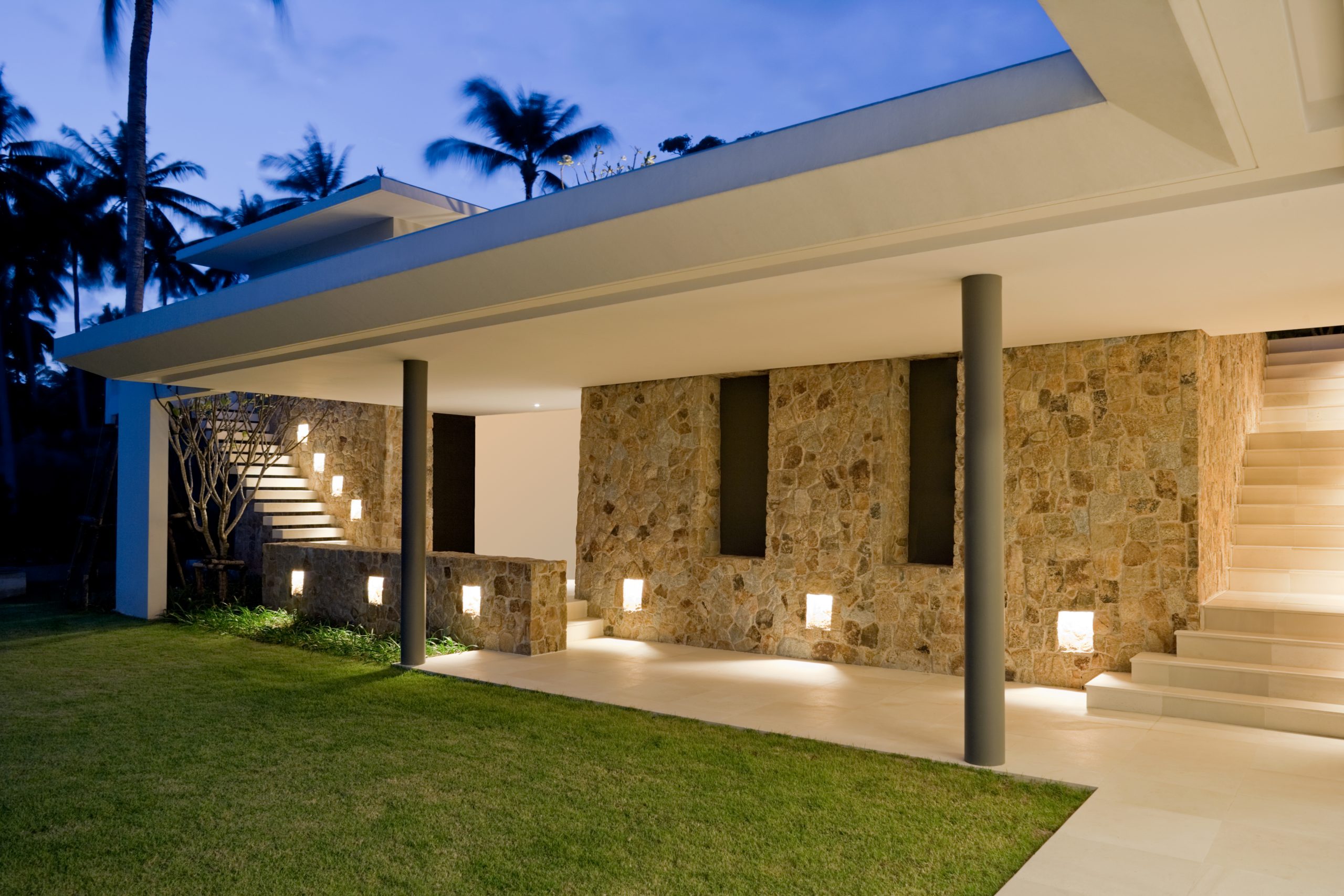

Green Marble Tiles: Pros, Installation and the Best Areas to Use Them
There’s a moment we see again and again in our Udaipur yard: a buyer who came for beige marble stops at a freshly polished slab of green marble and forgets what they came for. The deep forest tones, the white spider veining, the way the surface shifts colour under water — no ceramic tile has ever managed it.
Green marble tiles occupy a rare sweet spot in natural stone: the drama of an exotic material with the toughness of one of the hardest marbles quarried anywhere. Nearly all of the world’s commercial supply comes from one place — the serpentine belt around Udaipur, Rajasthan — which is why serious buyers deal directly with marble tile suppliers from India rather than through two or three layers of traders.
This guide covers what we’re asked most as natural stone manufacturers from India: why the stone performs so well, where it belongs in a project, how to install it properly, and what drives the price of an export order.
In this guide
- What is Indian green marble?
- Six pros of green marble tiles
- Best areas to use them
- How to install green marble
- Price & buying guide
- FAQ
What Is Indian Green Marble?
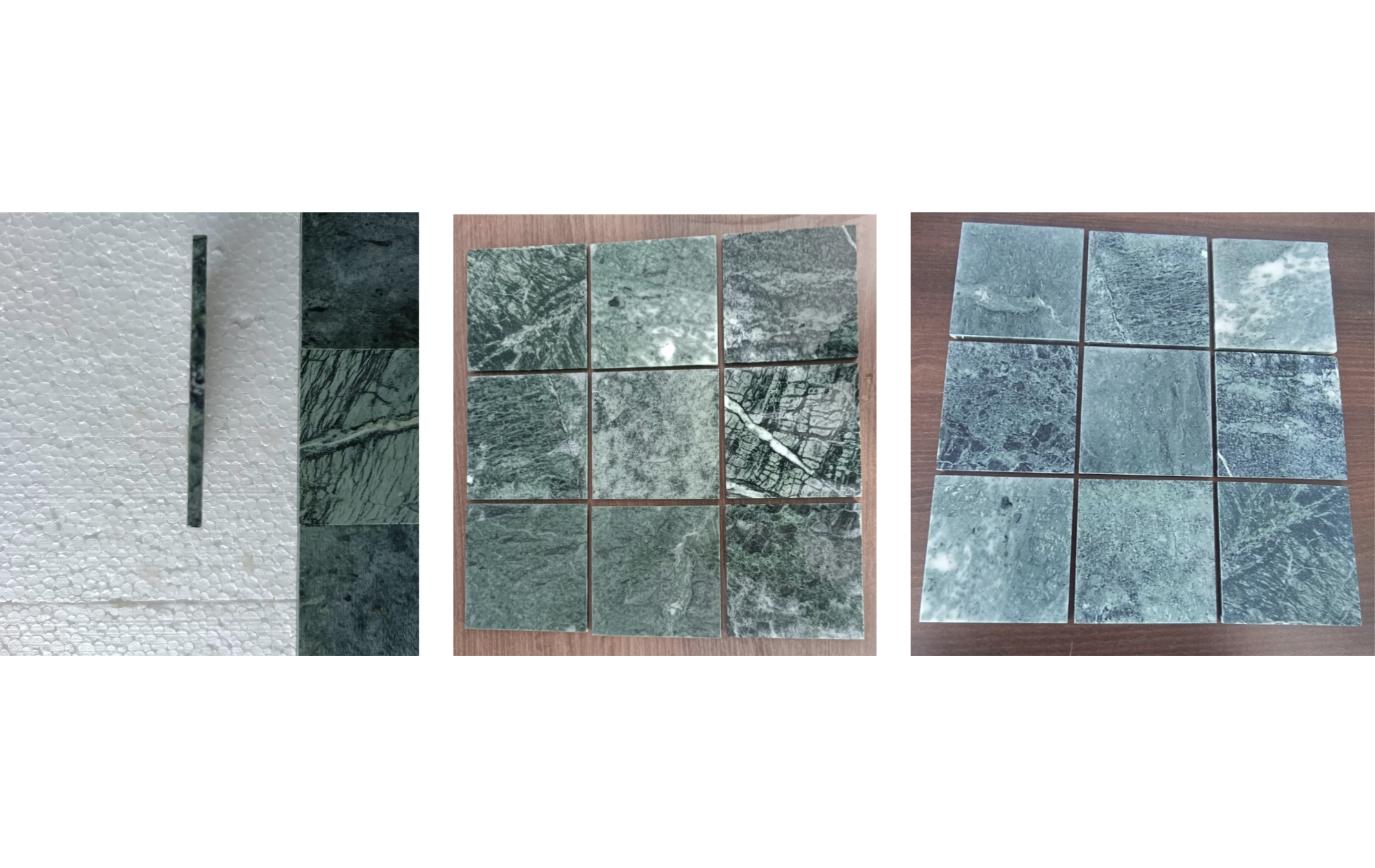
Geologically, Indian green marble — often sold as Verde Guatemala, Rajasthan Green or Forest Green — is a serpentinite: an ultra-dense stone coloured by serpentine minerals rather than the calcite that gives ordinary marble its softness. That distinction matters more than any brochure adjective, because it’s what gives the stone its two defining habits: it barely absorbs water, and it shrugs off wear that would dull a Carrara floor.
The shade range runs from pale pistachio to near-black forest green, usually crossed with white or grey veining. As mosaic tiles exporters, we cut the same blocks into everything from 600×600 mm flooring tiles down to 48×48 mm pool mosaics — so a project can carry one stone across floors, walls and water.
Six Pros of Green Marble Tiles
Every stone has a sales pitch. These are the six advantages of green marble flooring and tiles that hold up on site, years after installation.
- Exceptional hardness
Serpentine content makes it markedly harder than calcite marbles — it takes lobby footfall, luggage wheels and furniture without losing its polish. - Very low water absorption
Among the few marbles that genuinely belong in showers, pool surrounds and steam rooms. Water deepens the colour instead of damaging it. - No two tiles alike
Veining ranges from subtle drift to dramatic white webs. A floor of green marble tiles reads as one surface with a living pattern — impossible to fake in porcelain. - Works indoors and out
Frost resistance and density suit façades, terraces and pool decks. Tumbled and sandblasted finishes give reliable slip resistance outdoors. - Every format from one stone
Slabs, cut-to-size tiles, mosaics, skirting and mouldings from the same blocks — one consistent colour story across an entire project. - Luxury at a working price
Because the quarries and factories sit in one belt in Rajasthan, sourcing directly from India delivers an exotic stone at a mid-range budget.
Best Areas to Use Green Marble Tiles
The honest answer is “almost anywhere” — but some applications let the stone do something no other material can. Here’s where we see it specified most, and why.
- Bathrooms and spas
The classic green marble bathroom — vanity tops, shower walls, floor-to-ceiling feature walls. Low absorption means steam and splash zones are safe territory, and the stone’s spa-like calm is exactly what hospitality designers are chasing right now. - Kitchens
A green marble kitchen backsplash or island cladding pairs beautifully with brass, walnut and matte black. For worktops, specify a honed finish and a good sealer — the stone is hard, but acids still deserve respect. - Pools and wet decks
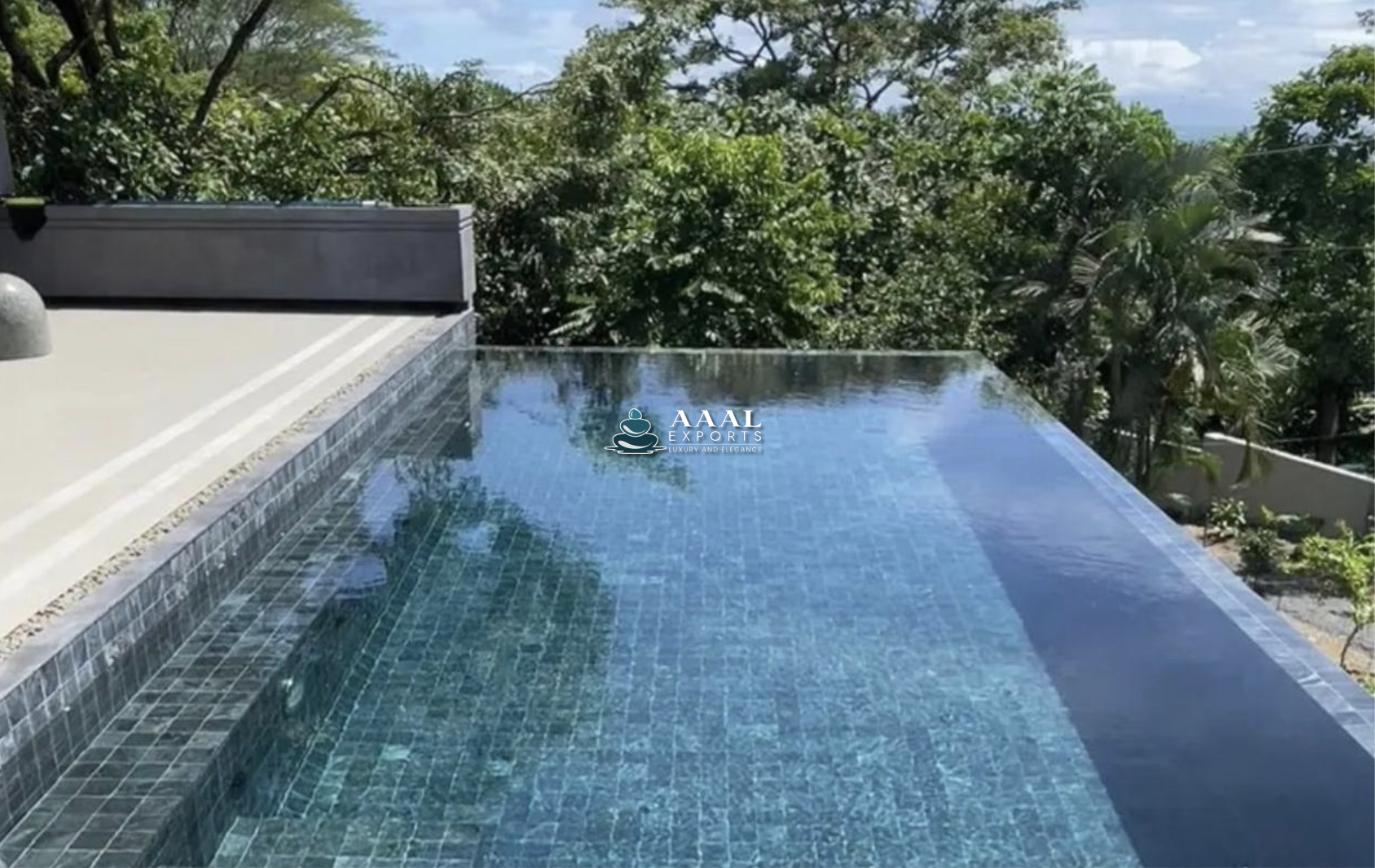
Green marble mosaic tiles turn pool water a lagoon blue-green that clients photograph endlessly. Tumbled 48–100 mm mosaics line the pool shell; larger tumbled tiles run the surround. This is the application that made us mosaic tiles exporters in the first place. - Lobbies and retail
Hotel receptions, boutique floors, restaurant counters — anywhere first impressions are the brief. The hardness that makes it pool-safe also makes it one of the few marbles comfortable under commercial footfall. - Façades and terraces
Exterior cladding, window surrounds, garden paths and terrace flooring in sandblasted or flamed finishes. The colour holds outdoors where lighter marbles weather and stain.
How to Install Green Marble Tiles
One warning before the steps: serpentine stones and water-based cement adhesives are a bad marriage — moisture in the adhesive can curl thin tiles before it cures. Every good installer knows this; here is the sequence we recommend to our buyers’ contractors.
- Dry-lay and blend first.
Open several crates and lay tiles out across the room, mixing lots so the veining flows naturally. Ten minutes here saves a patchy floor forever. - Prepare a flat, dry substrate.
Level to within 3 mm over 2 m, fully cured and primed. In wet areas, waterproof the substrate before a single tile goes down. - Use epoxy or reaction-resin adhesive — not standard cement thinset.
This is the single most important rule for green marble. Moisture-sensitive serpentine needs a water-free adhesive to prevent warping and staining. - Back-butter and set with tight, even joints.
Full adhesive coverage on the tile back; 2–3 mm joints for calibrated tiles. Cut with a wet saw and a continuous-rim diamond blade. - Grout with unsanded or epoxy grout.
Sanded grout can scratch a polished face. Wipe residue immediately — don’t let grout haze cure on the surface. - Seal, then maintain gently.
Apply a penetrating sealer once cured, re-apply yearly in wet zones, and clean with pH-neutral products only. That’s the entire maintenance regime.
Why Source Directly from AAAL Exports
Green marble is one of the few stones where geography makes the sourcing decision for you. The quarries sit in a single belt around Udaipur — so whether you buy from a warehouse in Rotterdam or Miami, the stone started here. Working directly with natural stone manufacturers from India removes the layers in between: you choose from live quarry lots instead of leftover stock, your grading is agreed at the factory, and the freight saving on a container is yours, not a trader’s.
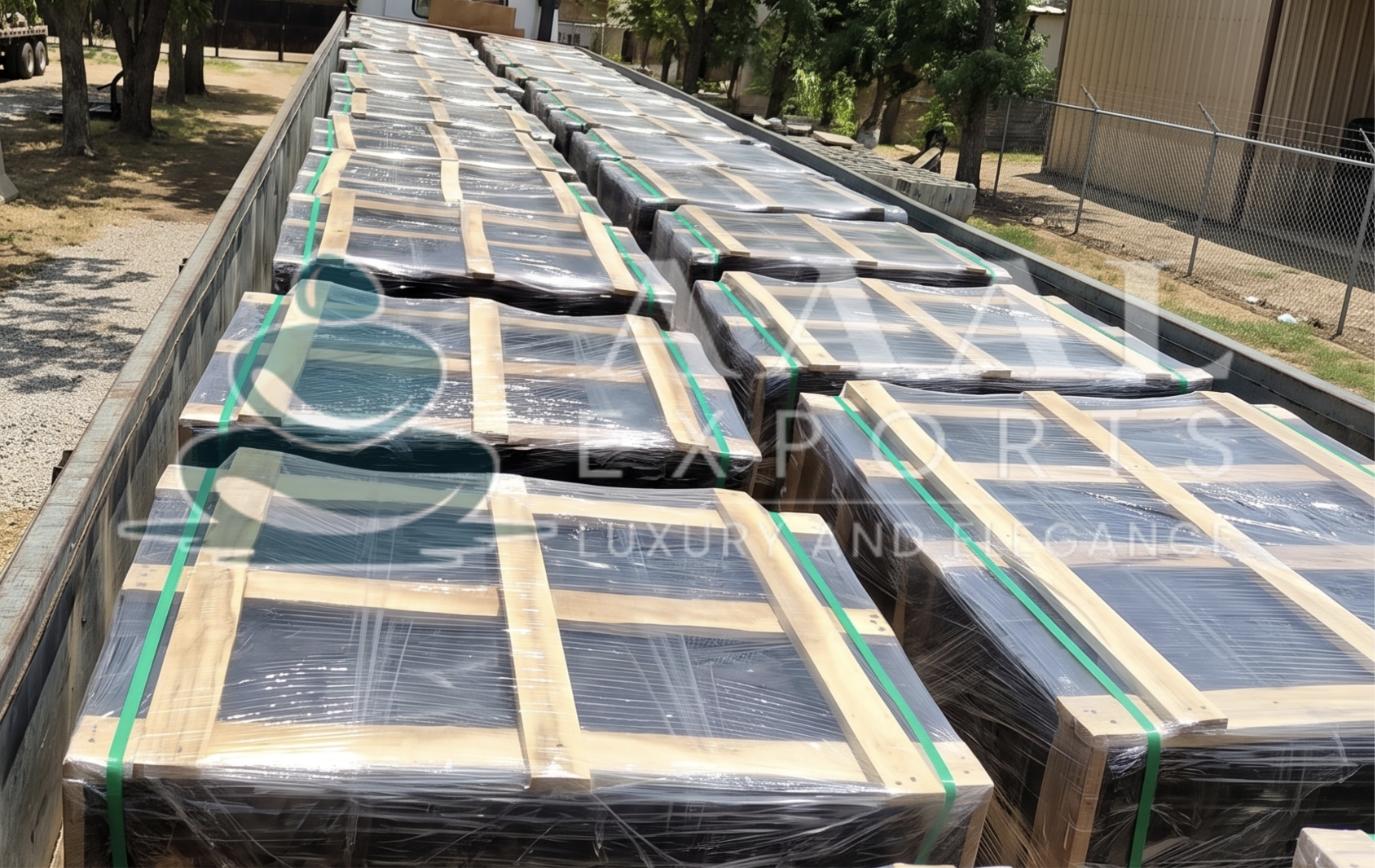
At AAAL Exports, we quarry-select blocks, process tiles, mosaics and cut-to-size in-house, and ship worldwide with export-grade packing. One factory, one quality standard, one point of accountability — from the first sample board to the container seal.
Frequently Asked Questions
Is green marble suitable for bathrooms and wet areas?
Yes — it’s arguably the best marble for them. Its serpentine composition gives it very low water absorption, so showers, steam rooms and pool surrounds are natural territory. Install with epoxy-based adhesive and seal after installation, and it will outlast the bathroom around it.
Polished, honed or tumbled — which finish should I order?
Polished for walls, vanities and low-traffic floors where you want the colour at full depth; honed for kitchens and commercial floors where a soft sheen hides wear; tumbled or sandblasted wherever bare feet meet water. Many projects combine all three from the same lot.
Get a current FOB quote on green marble tiles — with sample boards from live production.
Tell us your sizes, finish and destination port. As manufacturers and mosaic tiles exporters, we quote factory-direct and ship worldwide in export-grade crates.
Email – inquiry@aaalexports.com
Phone – +91 9810443277
Web – www.aaalexports.com