





Stone Processing
Stone is a tactile and versatile material, and it is an exciting experience to watch finished stone emerge in multifarious forms from a piece of rock. The processing of natural stone starts at the quarry, where a section of solid rock is found and blocks are separated from it with as little damage to the stone as possible.
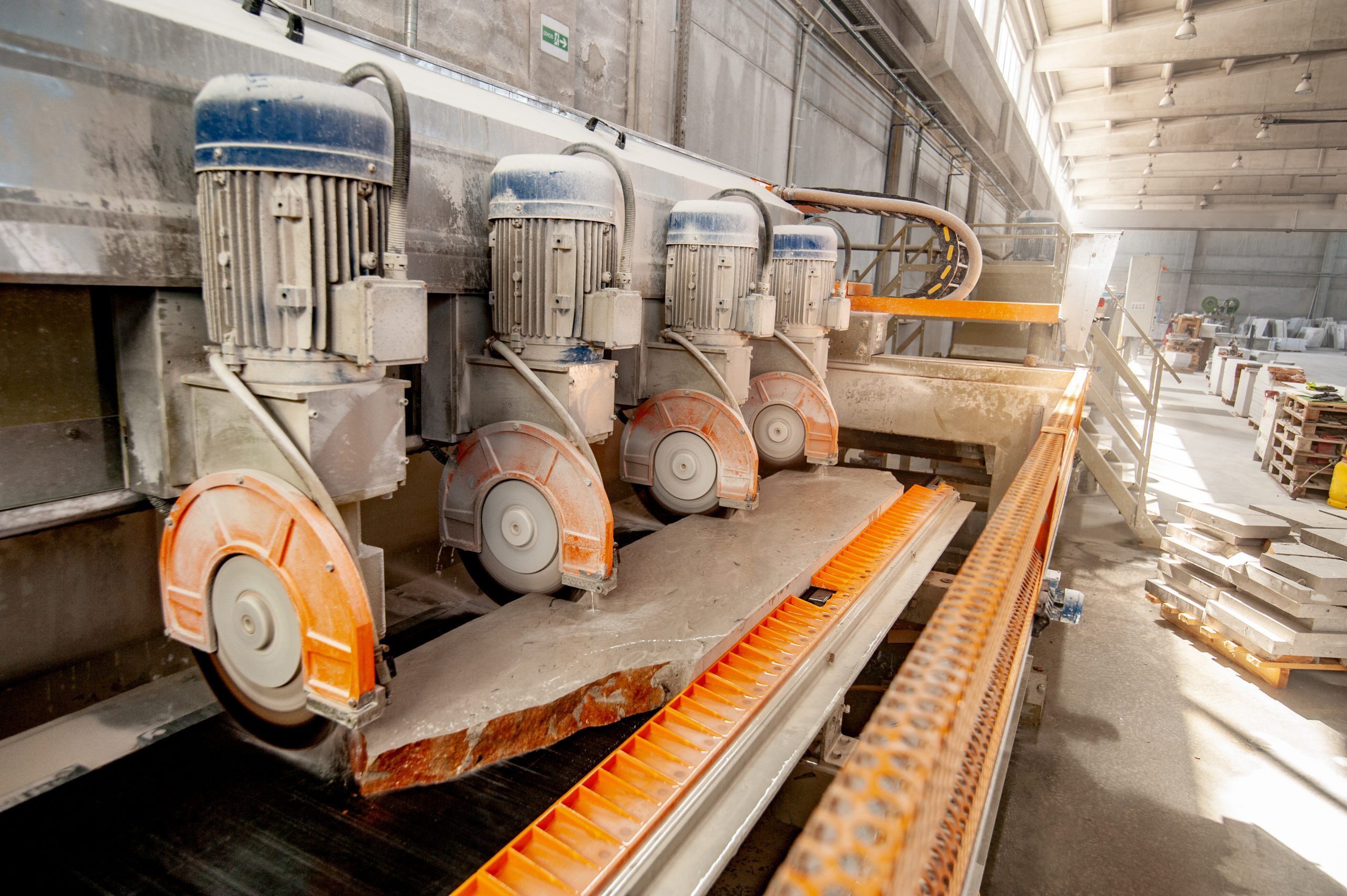
Heavy equipment is used to transport the blocks of stone from the quarry to the processing yard, where they are sawn into slabs and tiles. Secondary sawing reduces the slabs into dimensional masonry. More intricate work can be carried out on profiling saws and on planing and polishing machines, and of course by hand. Hand working of stone, however, retains an essential place in the last stages of processing, when highly skilled masons work the more detailed stones to their finished form.
Sophisticated methods bring better results than brute force, and modern technology can be applied. The aim of using the latest technology is to make the sector more internationally oriented and to solve the problems of quarrying and processing, so that this high-quality, low-maintenance material can be used more widely in buildings and other construction work. The natural surfaced blocks are cut into pieces of varying thickness and sizes, as required. The surface is then given the required textures with different finishes.
Honed or polished surfaces are achieved by grinding the cut face with successively finer grades of abrasives. Sandstone and limestone are often available in a honed finish. Marble and other harder limestones can be polished. A polished surface is the most popular of the different stone surfaces, as it brings out the true color and pattern of the natural stone without changing its nature.